



The University of Lincoln’s National Centre for Food Manufacturing (NCFM) undertook a pioneering research project to assess the feasibility of electrifying refrigerated fish delivery vans. By creating a real-world “living lab” using telematics data, the project generated route-level insights into energy use, charging behaviour, and operating costs, helping to build an evidence-based pathway towards low-carbon cold-chain logistics.
The Challenge: Balancing Efficiency, Cost and Sustainability in Cold-Chain Logistics
Seafood distribution from the Grimsby cluster has traditionally relied on diesel vans, leaving operators exposed to fluctuating fuel costs, tightening emissions regulations, and increasing pressure to meet net-zero targets.
Cold-chain logistics introduce additional complexity. Maintaining consistent temperature control, managing payload constraints, and ensuring sufficient range create uncertainty around whether electric vehicles (EVs) can meet operational demands. Seasonal variations and reliance on public charging infrastructure further increase perceived risk.
Prior to this project, there was a clear lack of credible, real-world data to support decision-making. The University of Lincoln set out to address this gap by generating practical, route-level insights into the performance and viability of EVs in cold-chain operations.
The Solution: Real-World Testing Through a Living Lab Approach
To address these challenges, the project deployed instrumented electric vans as part of a real-world “living lab”, benchmarking performance against comparable diesel routes.
At the core of the solution was the Geotab telematics platform, enabling the collection and analysis of high-quality operational data.
Key technologies included:
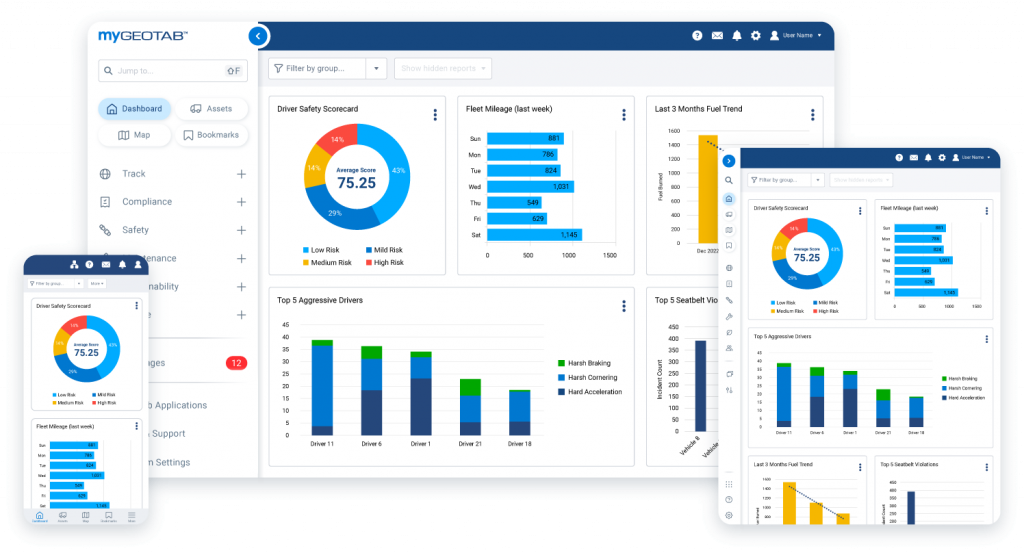
- MyGeotab Telematics Platform: Delivered a secure, centralised dashboard for analysing fleet data. The platform transformed complex datasets into actionable insights, supporting route analysis, cost modelling, emissions tracking, and EV suitability assessments.
- Geotab GO9 Device: Captured detailed vehicle data across a wide range of parameters, including location, movement, stops, battery state-of-charge, and energy usage. For EVs, this extended to charging activity, regenerative energy, and overall efficiency, providing a comprehensive view of vehicle performance.
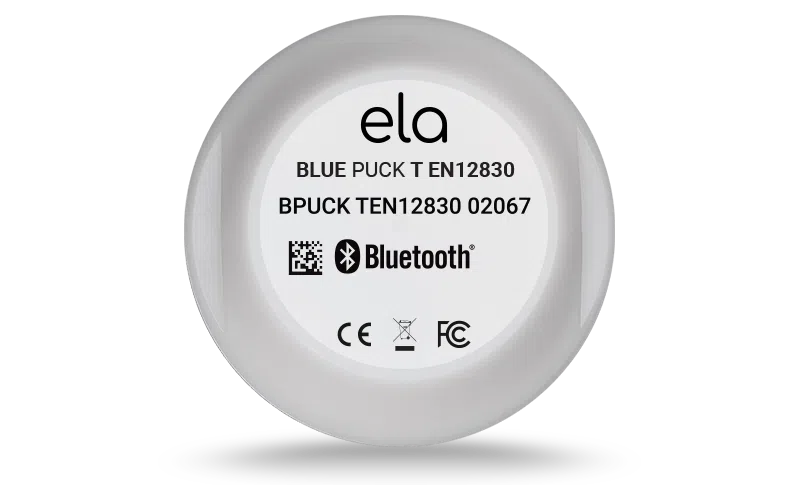
- ELA Innovation Blue PUCK T EN12830 Sensor: Enabled precise temperature monitoring throughout the cold chain, ensuring compliance with industry standards and providing critical data on refrigeration performance during transit.
Results and Key Findings
The project delivered a robust evidence base, with several key findings:
- Significant emissions reduction: EVs produced approximately five times lower CO₂e emissions per mile compared to diesel vehicles on similar routes, alongside reduced NOx emissions.
- Route suitability insights: EVs performed best on short, urban and mixed routes with access to home or depot charging. Performance declined on longer, motorway-heavy routes, particularly where reliance on public rapid charging increased costs and operational complexity.
- Cost efficiency gains: Running costs were notably lower for shorter routes, especially when off-peak charging was utilised. However, cost advantages diminished, or reversed, on longer routes requiring frequent public charging.
- Operational benefits: Operators reported improved reliability and reduced routine maintenance compared to diesel vehicles.
Crucially, the use of telematics enabled a level of insight that would not have been possible through traditional modelling alone, providing real-world validation of EV performance in cold-chain scenarios.
Impact and Value
This project has created a transferable, anonymised evidence base to support the electrification of specialist cold-chain logistics.
Key impacts include:
- Providing SMEs with practical, data-driven guidance on when EV adoption delivers both cost and environmental benefits
- Enhancing research quality through real-world operational data
- Supporting more informed decision-making for fleet operators and policymakers
- Positioning the region as a national testbed for low-carbon cold-chain innovation.
Overall, the project has strengthened confidence in EV adoption by replacing uncertainty with measurable, route-specific insights.
“Telematics supplied by Geotab gave us real‑world confidence in our data – enabling us to collect information to truly understand the pros and cons of moving from Diesel to EV for this specific set of circumstances at a level that would not have been possible without the system.”
Luke Talbot, Research Assistant (Food Logistics and Supply Chain), University of Lincoln
Future Implications and Next Steps
Building on the success of the project, future work will focus on:
- Refining route-based cost and carbon modelling tools
- Expanding trials into additional cold-chain sectors, including grocery and pharmaceutical delivery
- Exploring shared charging infrastructure and innovative financing models to reduce adoption barriers
- Continuing to leverage telematics data to inform ongoing research and operational improvements.
Telematics will remain central to these efforts, supporting scalable, data-driven decision-making.

About Trinsic Connected Car®
Trinsic Connected Car® is the automotive arm of Trinsic Limited, enabling organisations to optimise fleet performance and unlock value from real-time vehicle data.
As a UK-based leader in communications, connectivity, and IoT solutions, Trinsic crafts bespoke solutions tailored to each organisation, delivering the best in price, service, and technology. Through collaboration with industry-leading partners, Trinsic Connected Car® helps organisations improve efficiency, enhance the driving experience, and accelerate the transition towards a smarter, more sustainable future.
Get in touch:
01489850000

About the University of Lincoln
Situated in the heart of a historic city, the University of Lincoln transforms lives and communities through teaching, research, and partnerships. We support students to thrive both academically and personally. Over a quarter of our subjects rank in the UK top 10 (Guardian University Guide 2025), and we hold a Silver award for Mental Health and Wellbeing (Whatuni Student Choice Awards 2025). In 2023, we received the Queen’s Anniversary Prize — the UK’s highest academic honour. Our strong ties with industry, including Siemens Energy, have earned national recognition. More than 75% of our research was rated internationally excellent or world-leading in REF 2021, underscoring our impact. We’re ranked in the global top 300 for progress on the UN Sustainable Development Goals (THE Impact Rankings), including 63rd for reducing inequalities. Lincoln also appears in the QS World Rankings (801–850 band), reflecting strengths in student experience and international collaboration. Almost £400 million has been invested in our modern, waterfront campus — a welcoming home to students from over 100 countries.
The University of Lincoln’s National Centre for Food Manufacturing (NCFM) works with industry to advance sustainable, data‑driven food manufacturing and logistics. In this project, NCFM led an evaluation of EVs for cold‑chain delivery, generating operational evidence to inform policy and SME decision‑making.

About Geotab
About Geotab Geotab is a global leader in connected operations, video telematics and AI-powered insights. Trusted by more than 100,000 customers — from small and mid-size fleets to Fortune 500 enterprises and public-sector organisations, including the U.S. federal government, Geotab connects approximately 6 million vehicles and assets and processes 100 billion data points daily. With ISO/IEC 27001:2022, SOC2, FIPS 140-3 and FedRAMP authorisations, Geotab’s open platform and 700+ partner ecosystem unify safety, compliance and operations in a single system. Our mission: a safer, more efficient and more sustainable world in motion.

About ELA Innovation
With over 25 years of experience in manufacturing wireless sensors, ELA Innovation contributes to the massive adoption of Bluetooth Low Energy® in industry. Renowned for its ultra-robust products designed for extreme environments, the company supports hundreds of IoT solution integrators worldwide. Building on this expertise, the company unlocks technological potential to simplify the integration and deployment of cold chain traceability solutions while ensuring the integrity and compliance of millions of temperature data points collected every day.